
Whose History Matters? Moston’s hough Hall & The Paradox of Grade II Listed Buildings
Words by Ella Horniman
Just off the Lane sits Hough Hall, the oldest building in Moston and one of the oldest still standing in Manchester. Surviving 500 years alongside multiple owners, the English Civil War and two World Wars, Hough Hall is now home to a thriving museum and community heritage hub. Local history is preserved under a thatched roof and aged stone walls, where stories and memories live on as they are retold by the next generations. The museum is a lasting memory of Moston’s heritage, and the community centre is a symbol of hope and excitement for the future. A bustling café feeds the locals, and families are invited in for events and workshops bringing life and laughter to the local community. A safe, warm space for people to visit when they’re feeling lonely, with welcoming arms and a helping hand always available - Hough Hall is a perfect example of how communities thrive when they have heritage spaces to be proud of and part of...
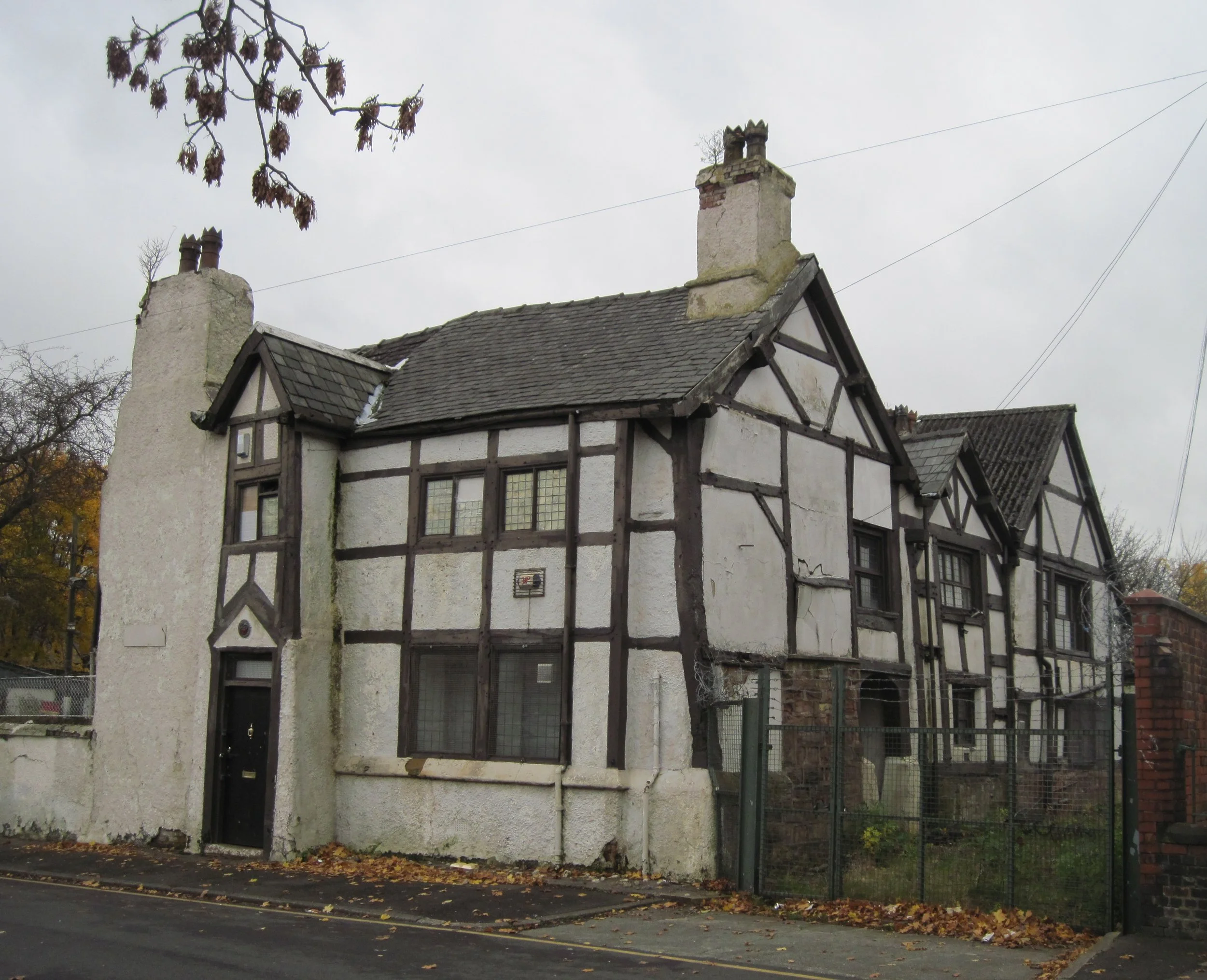
Hough Hall, Moston, Manchester, 9th November 2012. Tricia Neal
However, none of this is actually true and the demolition of Hough Hall began in 2021 after it was left to rot away into nothing. A collapsed, carcass of the building still stands behind fences and boards – a stark reminder that our history doesn’t seem to really matter. A Grade II listed building, Hough Hall was sold in 2020 for just £165,000 - cheaper than a 3 bed semi down the road. Thought to have been built in 1502 - a whopping 523 years ago - Hough Hall is not only the oldest building in Moston but one of the oldest in the whole of Manchester. The dream scene on the previous page describing a fictional Hough Hall community hub and museum was pretty depressing to write as I realised how we’ve been robbed of what we could have had. It also begs the question who does decide whose history matters? Why was one of the most historical buildings in our city left to rot?
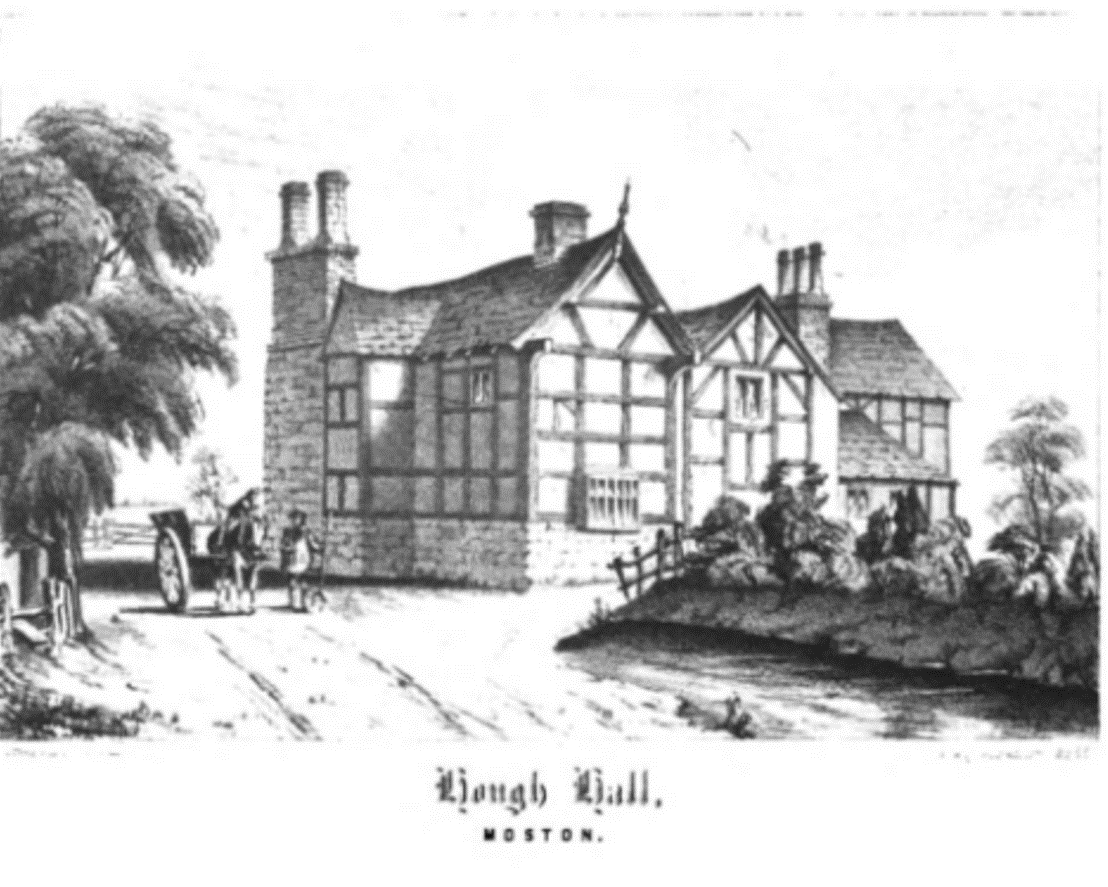
Hough Hall itself is thought to date back to the Elizabethan period - if not earlier. Situated just off Moston lane, it represents a snapshot of what life was like when North Manchester was just a series of agricultural villages. The building was thought to have been built for a merchant called Hugh Sherlock, and its rich history saw the building passed through branches of the Hough/Halgh family for almost 200 years before it was purchased by Moston landowner Colonel Samuel Taylor in 1775.
The surrounding area of Moston and the lane has its own rich history and has seen great changes while the building stood. In 1841, Miss Mary Taylor, who lived in the house where Manchester Dog’s Home stands today, sent her manservant John Robinson to take a record of the inhabitants of every dwelling in Moston. This private early census gave a unique look at the dynamics of Moston Lane at this time in history. These lanes and farm tracks eventually became today’s Moston Lane, starting at Rochdale Road and winding their way to roughly where the Gardeners Arms pub now stands. Despite being mostly farmland at the time, it was domestic hand looming that was most important to the local economy. Mary’s census recorded that on the Lane, there were 56 households recorded in total. 34 relied wholly or partially on silk weaving for their income, while only 11 were supported by farming, with the remainder involved in trades such as bricklaying and textile finishing.
Over the 40 years between Miss Taylor’s census and the nationwide census of 1881, many things had changed in Moston. The domestic silk weavers were all gone, and farmland was starting to disappear under bricks and mortar. Moston lane was transitioning from a rural, agricultural area to a suburban one. This period marked a significant shift, with farmland being rapidly sold for residential development, new schools were being built, and original streets renamed.
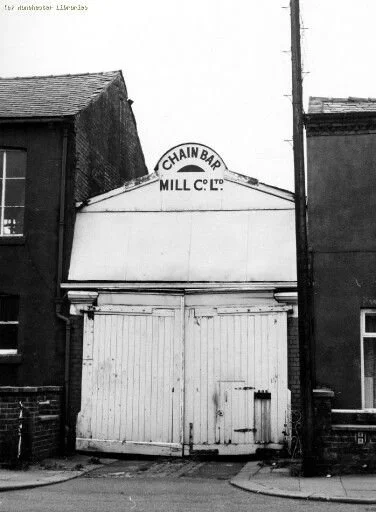
Moston lane was also culturally enriched thanks to immigration, where incomers who’d been born in places as diverse as North & South America, Australia, Italy and Russia - as well as all counties outside Lancashire, had all settled in Moston by 1881. Working mainly in the cotton, dyeing and mining industries these newcomers were a mixture of ‘masters’ and ‘men’ and there was little physical separation of the classes on the Lane. Chain Bar was a typical example, with a mill owner living and socialising in close proximity to coalminers.
Today, Moston lane is even more diverse in people and cultures - but a lot of this local history is no longer visible or shared and is at risk of being forgotten altogether. Industries closed, jobs changed, and the ever-changing landscape now hides the old mill sites and mines that came before. The carcass of Hough Hall is hidden behind boards, fencing and ‘Do not enter’ signs. Without a building to still stand in its spot, who will remember what was there and who will be around to share the stories?
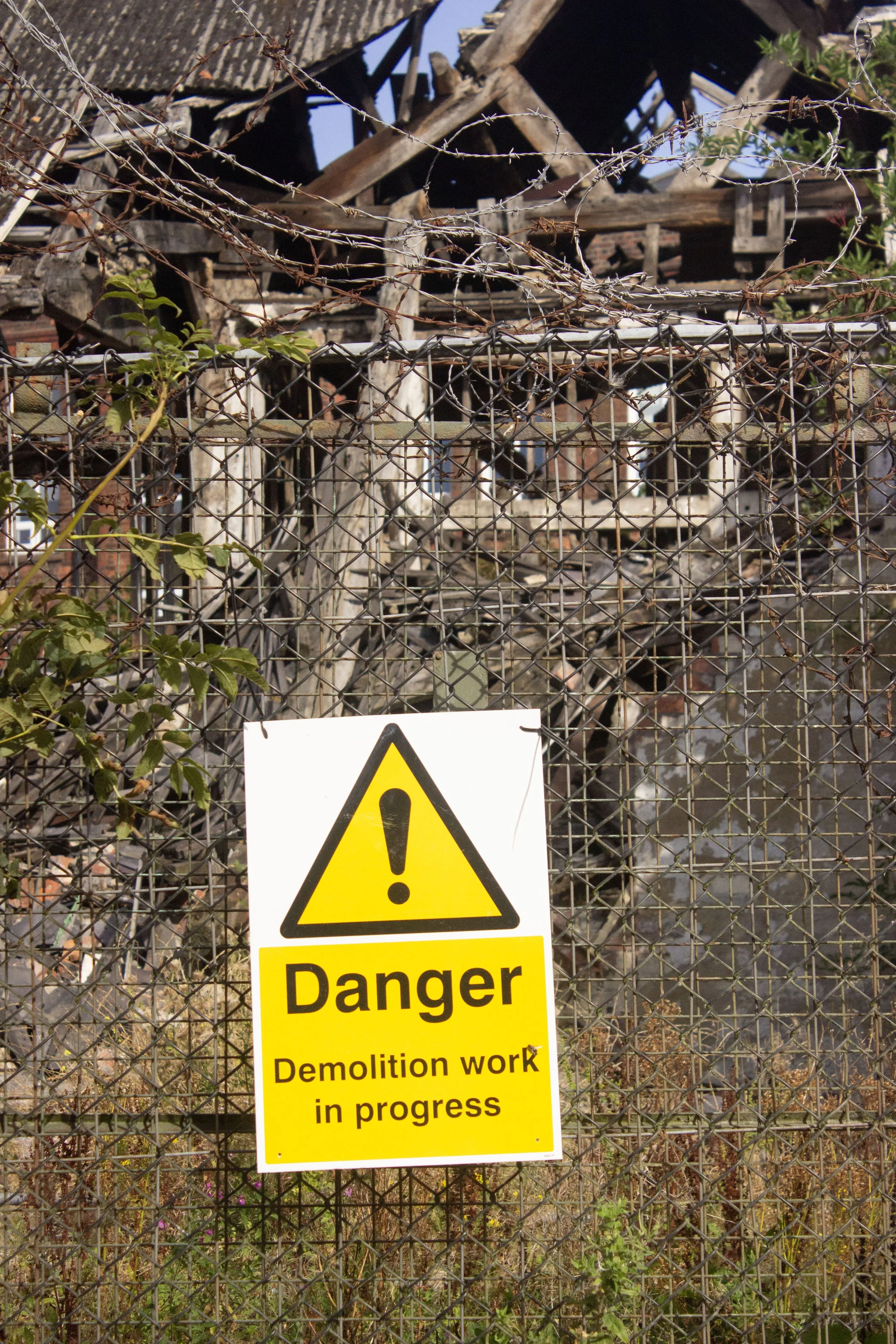
Hough Hall Partial Demolition, 2025. Photo by Author
Over the years, both historians and locals pleaded with various owners and developers to save it - or at the very least try and convert it into something usable - but each consecutive owner seemed to hold onto the property without giving any consideration or investment to conserve the building. Let it rot, let it be vandalised, let the weather do the rest of the job and then you can call it an eyesore and find the excuses to demolish it. Perhaps if it was situated in a more affluent part of Manchester, Hough Hall could have been ‘saved’ by community shares, a charitable trust or a group of friends who care – all concepts that are pretty much inaccessible in an area of high poverty and deprivation like the North of Manchester. Historian Thomas McGrath whose written previously about the intentional dilapidation of Hough Hall said “Future generations will look back and wonder how we could let our tangible history be stripped away. How a Tudor-era building could be lost in the 21st century when we not only have legislation to protect these buildings (in theory), but also when we should appreciate and celebrate the longevity of these structures.” There lies the paradox of the Grade II Listed building – a contradiction where the heavy legal restrictions and high maintenance costs meant to preserve a historic property end up causing owners to delay crucial repairs, ironically accelerating the decay of the very heritage the system claims to protect. While this paradox could be used to excuse any repairs made to the building over the years, the fact is not enough was done to preserve it before it was too late to save.
It’s not like there isn’t money for culture buildings in Manchester – but who or where is the priority? Aviva Studios, home of Factory International a landmark new arts venue in Manchester, had a final cost of close to a quarter-of-a-billion pounds - with £110 million in funding from Manchester City Council. Dubbed a ‘vanity project’ by some critics, whatever your opinion on the venue is - it’s a prime example of how arts funding is often so unevenly distributed. While it’s great the city is making more investment in the arts, just imagine what £110 million - or even just 1 million could do for grassroots arts organisations in the poorest parts of our city. These are the people that are on the ground, and really making a difference in their communities - where smaller amounts of money can make massive impacts.
There are many examples of historical buildings under threat of closure in Manchester and many that we’ve already lost, like the iconic Church street market in the city centre closing suddenly after 54 years and Conran Street Market, Harpurhey shutting its doors after nearly 100. Conran market was thought to be the last privately owned market in the city and it was sold to an unknown buyer in July 2025 for £738,000. In July 2026, just a few weeks ago, a huge blaze erupted at the derelict site, firefighters were in attendance for six hours and later two teenage girls aged 13 and 14 were arrested on suspicion of arson. Again, could this mystery buyer not have already done something with the abandoned site having had ownership for a whole year?
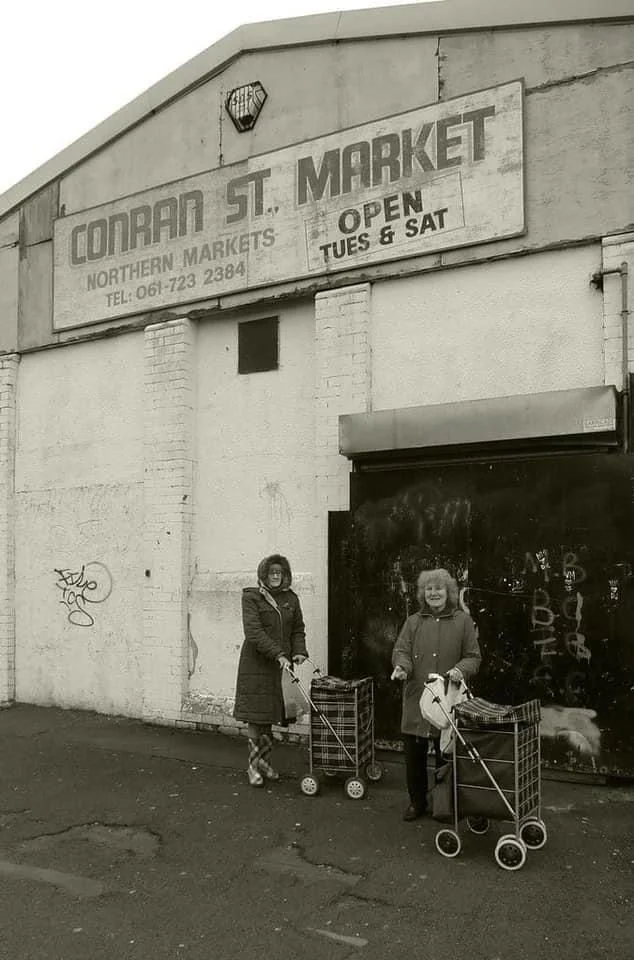
Old photo of Conran Street Market
Part time Producer and Full Time Salfordian Jack Clarke wrote for Culture Matters “Once you start looking for what’s been left to rot, you see it everywhere: old pubs, cinemas, churches, halls. Every neighbourhood’s got a building that used to mean something, a place where people gathered before gathering became a “risk assessment.” And each one tells you who gets to have a past, and who just gets cleared away for parking.” Even the old buildings that still stand tall don’t seem to be put to good use. One of Britain’s first municipal parks, opening in 1846 is Queens Park, Rochdale Road. A huge old building opened in 1884 sits in the centre. What once hosted a famous exhibition of Manchester artefacts in 1909 to 1952, is now closed to public and used as nothing more than a storage unit for Manchester Art Gallery. Is it any wonder North Manchester is considered a “cold spot” for creative industry when local history, art and our culture are barely even treated as an afterthought?
In my opinion, preserving our history is more important than ever, in an age of misinformation where violent anti-immigration is being pushed by both the left and the right. Extremism always tries to rewrite the narrative, scapegoating minorities and spreading division. A great example being Skinhead culture - born from shared youth identity where working-class pride and Jamaican sound systems formed solidarity between Black Caribbean immigrants and white-working class kids - and hijacked by extremist groups who appropriated the look and distorted the subculture. This led to mainstream media using the term skinhead in reports of racist violence, regardless of whether they actually were or not, leading to extremely negative associations around the look.
Manchester has always been a beautiful, diverse multi-cultural city that wouldn’t be the place it is today without immigration, and racism has always been perpetuated from the top down – not the bottom up. By keeping our local history under wraps, only taught to those who seek it out themselves, we become disconnected from it - and from each other. By not investing in local heritage, culture and community we risk losing more vital third spaces where people can connect, support and learn from each other.
I took these photographs in late summer 2025, showing what’s left of Hough Hall - a carcass of a building - that could have been so much more - after some decision makers somewhere decided that our history doesn’t really seem to matter.
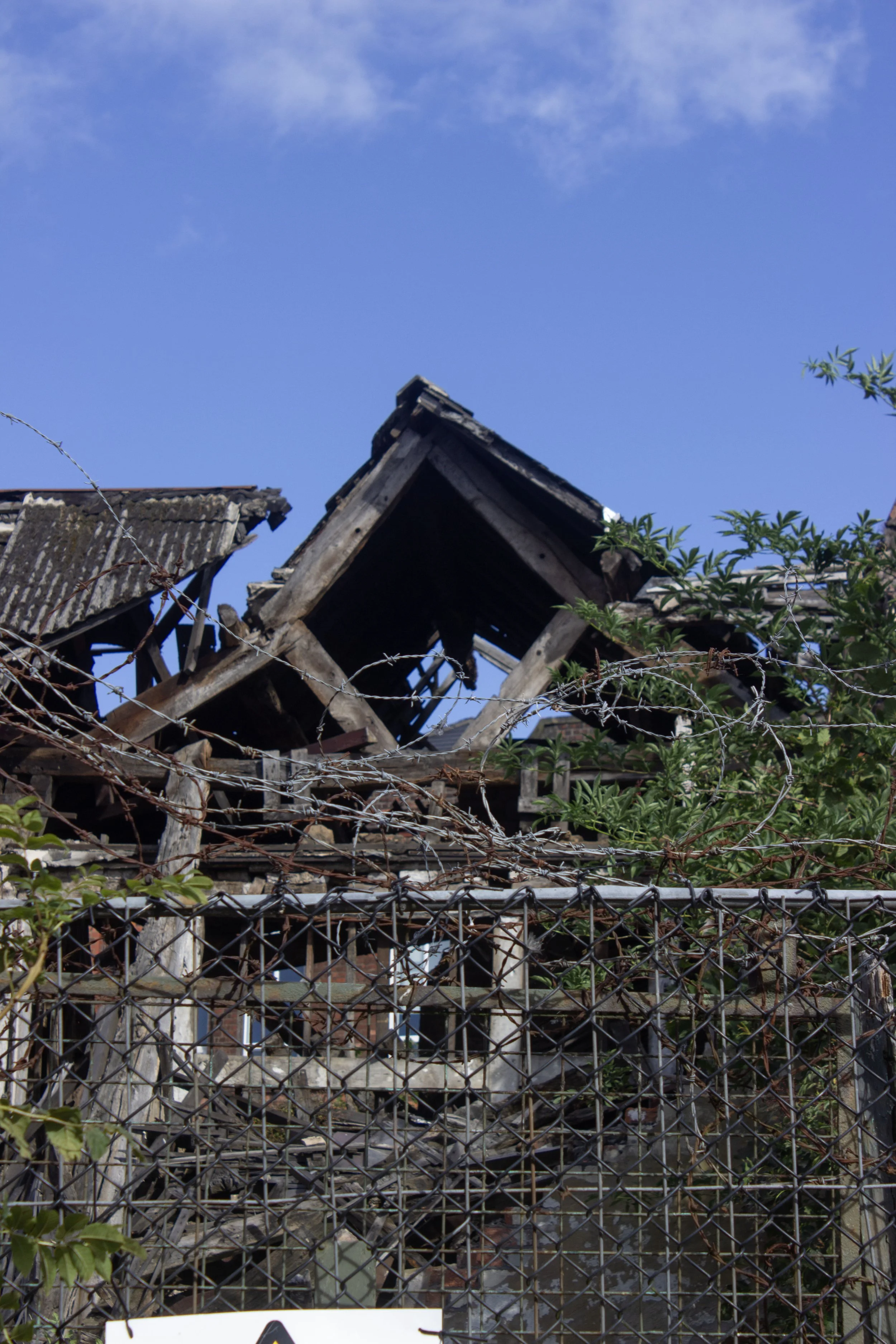
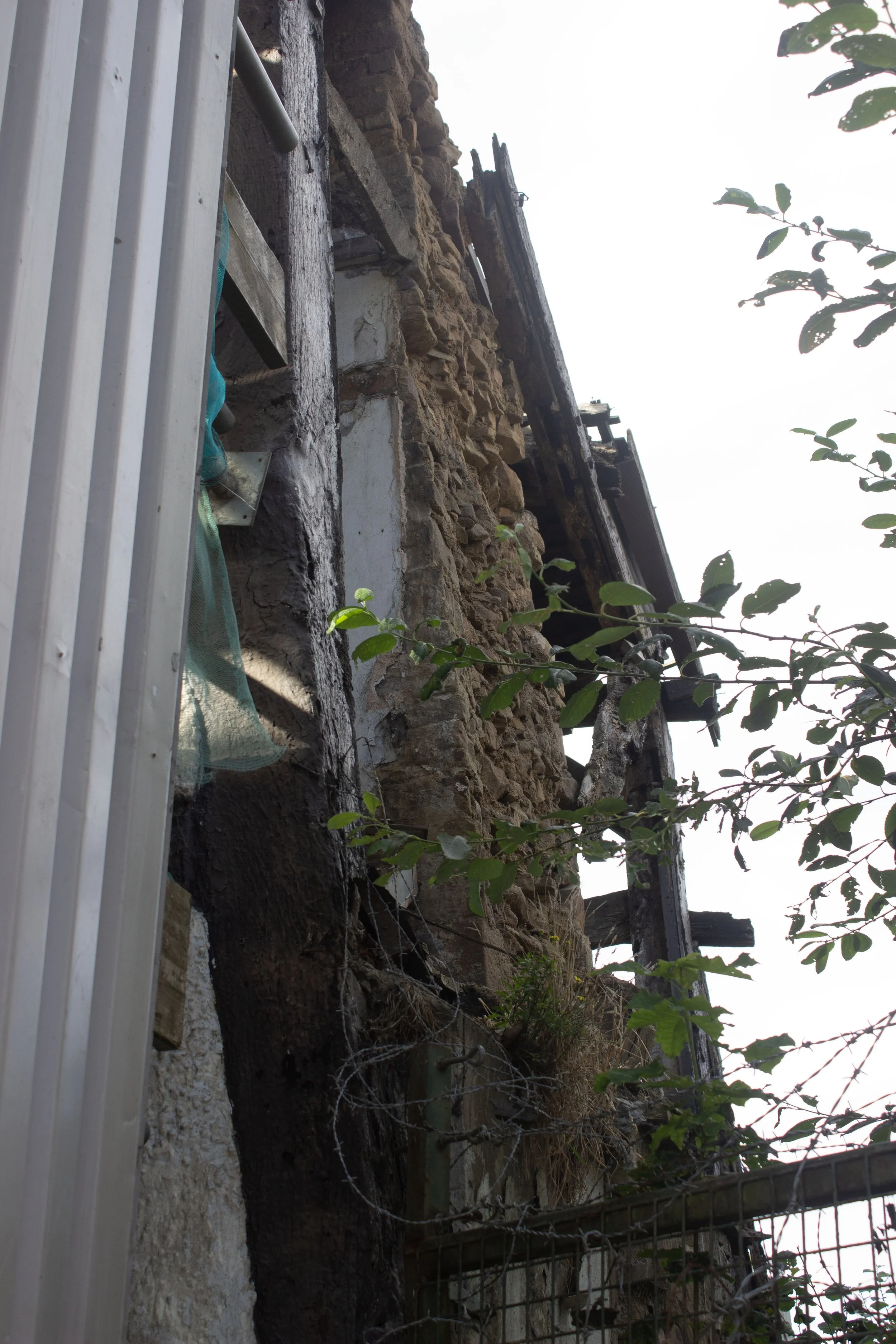
Hough Hall, 2025. Photo by Author
If you too are pissed off about the state of our city’s historical buildings, you can read Jack’s article on listed buildings (@clarkeofsalford) on www.culturematters.org.uk
and more of Historian Thomas McGrath’s work on www.ifthosewallscouldtalk.wordpress.com
WORDS: Ella Horniman